The Posture of our Hearts.
“Come, let us sing to the Lord! Let us shout joyfully to the Rock of our salvation. Let us come to Him with thanksgiving. Let us sing psalms of praise to Him.”
-Psalm 95:1-2
Last weekend I was back at camp, handling tech and photography for my church’s Women’s Retreat. Aside from being outnumbered 160-8 by the opposite gender and editing pictures until almost midnight [twice], I thought the Retreat was amazing and impactful. I came close to calling this post “Fruit at Camp #11”, but realized there aren’t any official Fruits of the Spirit left (come on, Paul).
For me, the worship times were memorable. The songs were great, and having a trio of sisters sing was special. But the most impactful part was watching these women (from teenagers to grandmas) worshipping God and expressing their love for Him. That got me thinking about today’s post.
Today’s growth point is…
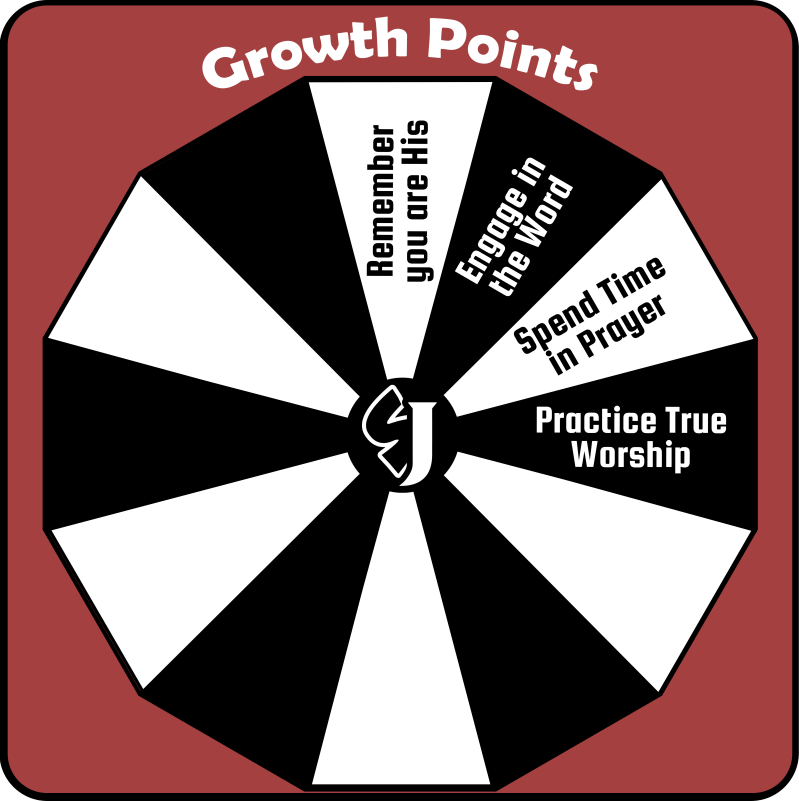
What is true worship? Our world worships ungodly things. In my eyes, true worship is worshipping something worth worshipping (yes, I just used worship four times in a sentence). We can worship money, people, power, or possessions, but only God is worthy of true worship.
I find that when I’m not careful, it’s shockingly easy to pledge my worship to other things. Please don’t fall into this pit. Our ultimate worship belongs to the maker of everything, and Him alone. That is true worship.
In His Words…
In John 4:24 Jesus says,
“For God is Spirit, so those who worship Him must worship in spirit and in truth.”
When I stumbled upon this verse, the phrase “worship in spirit” hit me. On one hand, you can have people who are belting out the words of a song without truly worshipping, and on the other, you can have people who are physically unable to speak and yet worship God in the deepest sense.
Whether you worship by yourself, with others, at home, at church, at a concert – God is present. He loves hearing our voices and seeing our expressions of devotion, yet He wants our hearts even more.
What is worship?
If you’re wondering about worship, in its most basic sense, it focuses on bringing praise to God’s name. Most people associate worship with singing, shouting, or dancing before the Lord (which is what King David often did in the Bible). Really though, worship can be any act done to glorify God that has pure motives.
King David sang joyfully to God. He played his instruments for God. He danced before God. He cheered and he cried before God. These are all forms of worship. Luckily for me, as a writer, King David also wrote dozens of Psalms worshipping God.
If you have any doubts about worshipping God “properly”, please toss them aside. As long as you live out God’s commands and seek to bring Him glory, you’re worshipping Him.
Room to Grow.
At the Women’s Retreat, I was privileged to attend the worship times. As I took photos, I couldn’t help but notice the hands raised to Heaven, the voices echoing the singers’ words, and the serene looks on dozens of faces.
As I made my way around the edges of the room, I felt a pang in my chest. Why is that never me during worship? Why do I never seem to connect with God in that way?
Maybe I’m the only one who can feel disconnected during worship. I know it isn’t fear that stops me from showing outward emotion, because I’ve done crazier things on stage at camp. I don’t have my phone on during worship, so it isn’t that. Then what is it?
Surrender.
The day after the retreat, I went for a walk, and this word popped into mind. First, worship isn’t about me or what I can get from it. Second, worship is about submitting ourselves to God’s will. Most people, when in the presence of some great leader, celebrity, or athlete, would instantly do anything asked of them. Are we not to do the same before God?
I now realize the key to truly worshipping God isn’t merely overcoming fear or doubt…the key is surrendering before God. My mistake was confusing the actions of worship with the attitude of worship.
My mom tells me that what you do during worship (singing softly vs. singing loudly, kneeling vs. standing, hands raised vs. hands in pockets) isn’t the crux of worship. Rather, our actions are to be an outward expression of the inward posture of our hearts.
On that note, I have three growth points. Seeing as I’m writing these for myself as much as anyone, I’ll practice implementing them in the coming weeks at church and elsewhere.
1. God First
“I need to worship because without it I lose a sense of wonder and gratitude and plod through life with blinders on.”
-John Ortberg
Last week, I brought up prayer. The week before, scripture. This week, worship. It’s no irony that all three serve an identical purpose: to know and glorify God. Each of these is a key component, different as they are. We can’t survive without any of them, because they exist to help us know God.
No matter what book of the Bible you’re reading (Luke or Leviticus), no matter what prayers you’re praying (long-term or immediate), no matter how you’re worshipping (in a sanctuary or a spare room), you’re bringing glory to God.
I err in thinking that just because the way I worship may not look the same as everyone else, it means my worship is somehow subpar. But that’s falling into comparison, when the focus should be on God.
2. Words Second
“I will praise the Lord at all times. I will constantly speak His praises.”
-King David
Words matter in any song, Christian or otherwise. There are often deeper truths about God hidden within the lyrics. If you’ve ever had a “this song hit different today” moment, you know what I mean. I need to work on ingesting not just the song’s words (because then it becomes easy to pay lip service), but also the song’s heart.
Worship is powerful, and as such, we must be conscientious that we aren’t so caught up in the music that we miss the message. When I sing praise songs – whether they’re slow hymns or upbeat worship – I want to remind myself that God doesn’t care if I know every song by heart; He wants my heart.
3. Actions Third
“It is in the process of being worshipped that God communicates His presence to men.”
-C.S. Lewis
In time, as we grow to love the Lord more, we will draw closer to Him through worship. Naturally, we’ll be more inclined to sing louder, raise our hands in thanksgiving, or break into prayer mid-song.
However, as God speaks to everyone differently through His Word, so He speaks differently through worship. Our actions and our posture matter, but on their own, our actions – or lack thereof – don’t define our engagement with God. If so, the man or woman dancing for joy or raising their arms would connect far deeper with God than the quadriplegic sitting in his or her wheelchair.
The point I’m getting at is this: worship is about God. Period. Full stop. I fall short by flipping my own list around, and defining worship as something first about doing the right actions or gestures, then about the words and singing them loudly, and lastly about the one I’m worshipping.
It’s when we go back to the most basic truth that we can praise God with our entire being. Worship isn’t about us. It isn’t about whether we like the songs or the lyrics or whether we do or don’t do this or that. Worship is about coming before the Lord and praising Him.
The Challenge.
I’m ending this post with a challenge, namely for myself. Worship needs to be about God. The music, the lights, the people around me, the emotions, the energy – none of that matters. What does matter is my internal posture before God. Am I surrendering fully to Him, or not? Are you?
In the 1990s, singer-songwriter Matt Redman realized his church had created an atmosphere where the focus was less on what the congregation was bringing to God and more on the glamour and what they could get from worship. So one day they nixed the entire band and sound system, and up came Matt with a guitar.
The words he sang (which became the song The Heart of Worship) echo my heart to perfection. Allow me to finish with them…
“When the music fades, all is stripped away, and I simply come, longing just to bring something that’s of worth, that will bless your heart. I’m coming back to the heart of worship, and it’s all about You, Jesus.”



 Writing, Life, Faith
Drop a Comment